Are we really available to listen to children?
Catherine Lockett
I attended a webinar on hearing and honouring children's voices in safeguarding, led by London Safeguarding Children’s Partnership - here is some of what I captured, and for you to think about…
The procedural norm for us is to see children alone, record their wishes and feelings and use quotes in reports; however, we need to ask ourselves, “If a child speaks and nothing changes, are they truly heard?”
“I told them what was happening, and nothing changed”.
The definition of the voice of the child refers to the real involvement of children in expressing their views, opinions and experiences. It includes verbal and nonverbal communication and goes beyond simply seeking their views, to actively including them in decision-making processes (NSPCC 2024)
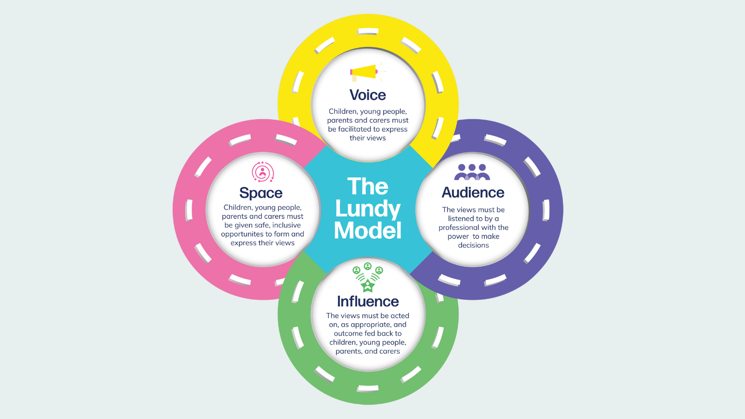
Do we really enable children to contribute to their own case decisions? Do we really enable children's views to contribute to service improvement? If we truly do, this moves from recording to actively contributing to change and does not just mean that children's recordings are locked away in case files. By fully understanding the importance of hearing children's voices, the webinar talked of three areas for consideration...
So why are children's voices missed?
Power and fear - children have limited power in adult-led systems where adults determine the outcomes. Speaking can feel risky; it has consequences, it could get someone in trouble, they might not be believed, things might escalate, “I might be taken away, and things might be worse for me”.
Fear shapes what children say and what they don't say. It was raised in the webinar that a question we should ask is, “What might have made it safer for a child to speak?”
Children's voices are often translated into adult language and reshaped to fit a process, an assessment, a form that we use – I found this interesting, and I would like to add:
“Do we create a system that fits our purpose, or do we try and fit our purpose into a system that does not fit, or offer creativity, flexibility and allow and encourage professional curiosity?”
Following on in the webinar was a discussion about...
Children's voices are often translated into adult language. One of the delegates posted a well-put point about “our adult filters can also be our own defences, sometimes it can feel unbearable to sit with what a child is experiencing, especially when they communicate this to you not in words but in feeling. It can make us want to tidy things up into something neat and understandable instead of sitting down with the unknown and painful things they are feeling.” This made me think about the importance of protected space to reflect, to be held, to be supervised and to have a debrief about a situation and the impact it also has on practitioners' resilience, and their own thresholds of discomfort.
Some children are overlooked because of who they are; they are less likely to be believed, and their voices are doubted. Children's fragmented recollections tell us different things, and children can be seen as coached, influenced and unreliable, all leading to “no further action”.
There is clearly a lot of inequality in our system, and a further question was, “Whose voices are the most comfortable for us to listen to?”
When we consider children who are avoidant and silent, do we truly consider things from their perspective? Do we “put ourselves in their shoes” regarding the consequences if they speak? However, it's more than just speaking - we miss so much when we miss nonverbal communication. When children are prepared to talk to us, they need to be heard by people who can influence change.
Reference was made to the Lundy model of participation...
So, back to the heading of the webinar - the difference between hearing versus honouring:
Safeguarding can mean making decisions that children might not like or understand and sometimes we can't act on what they want, and this can lead to feelings that their voice doesn't matter. However, children have a right to know the decisions being made, and why, and how we connect and communicate with children is crucial.
“I didn't like the decision, but they told me why”.
We must be honest about limitations and safety, but how we respond to children is important; we need to leave the door open and not shut down the voice. We need to check how we say things; we need to check with children what their level of understanding is, and we can ask them, “What is your understanding of this?”, we can ask them, “What is your understanding of what might happen next?”
We can't always fix things, but we can acknowledge the impact. The speaker talked of advocacy. Here are a few definitions for the context of hearing and honouring children’s voices...
A question that was raised in the webinar was, “If this child were in the room now, what would they be saying to us?” - who can truly represent the child if a child is not in the room?
It’s very difficult for children when they are faced with loyalty, there could be coercive control and about the dilemma and upset they may cause to their parent, their carer, especially when they are put in a situation where they're talking in front of parents or carers, in an environment where they live and continue to live, where there may have been domestic violence etc. Children need to be seen in their own safe space where they will know that no one will harm them later; this is obviously something that they would continue to worry about.
We ended the seminar today thinking about “one small thing that we could make that would increase a child’s real influence (not just their visibility)”.
Children's voices do not need to be louder, systems need to be brave, and systems need to be willing to listen to the complexity and create conditions where a child’s voice is allowed to matter.


